Saturday, May 8, 2010

The Beginning of the End

Over the past 6 weeks, recycle mania has taken many steps towards living a more sustainable, environmentally friendly lifestyle. The restraints of our project included not purchasing anything, except for on-campus food, for the entire duration of the project. The focus of our project and blog was to reduce our impact and reuse and recyle our current belongings. We began by eliminating trivial items from our daily routines, such as straws, plastic bags, lids, paper towels, napkins, and utensils, to reduce our impact on the environment. These were all unnecessary items that we used simply for convenience and luxury to make our lives easier. Our group members were successful in eliminating those items and then proceeded to influence and persuade other members of the community to follow their lead. For example, when we went to eat with friends, we would explain the negative impacts of using a plastic bag that would sit in a land fill forever because it never degrades.

Our group also investigated the wasterfullness of college students, particularly with electronics, batteries and plasitc bottles or cans, and the efforts of Elon University to become a more sustainable campus. In the early 1980's, a student initiated movement caused an increase in campus recycling by 31%. Among the many items Elon reccyles for Elon students, batteries are a significant portion. Four battery recycle stations can be found in on campus in high traffic areas for the convenienc of students. With regards to electronics, such as computers, cell phones, ipods, and cameras, virtually every student has at least, sometimes more than, one of each. Many students also purchase a new computer, or other piece of technology, every year to ensure they own the latest model. This is an extremely wasteful practice that is a product of a media-advertisment influenced society that relays the message to people that they constantly must have the most up-to-date technology to function in society. This trend is exaserbated by the fact that people do not dispose of their "old" technology properly. Chemicals inside electronics have severe medical side-effects. Time magazie reported that 1, 15inch computer monitor could have up to 7lbs of lead.


So what's the moral of the story? Don't let corporate America confince you that you must have a consumerist lifestyle to be happy! Put away the credit cards and cash! Stop buying, buying, buying! Save money and time and put more effort into relationships and living a simpler lifestyle. Trust me, you'll enjoy having more time and money and living a less stressful life. If you must buy something, buy something made from recycable materials, or better yet, something that has been used by someone else. Reusing items is a great way to reduce your impact. Finally, after you've bought something and are finished with it, recycle it! Avoid an unnecessary contributor to landfills and chemical exposures by reclying items properly. Or just swap items with friends. What's one man's junk is another man's treasure!

Where is the whole “green” movement going to go in the future? One thing is for sure: if we do not either conserve our resources or find an alternate means for energy that is inexpensive and efficient, we are going to be headed down a long and sorry road. While the think tanks in the science department are working on a solution to that problem, regular people are going to need to take initiative to save our resources.

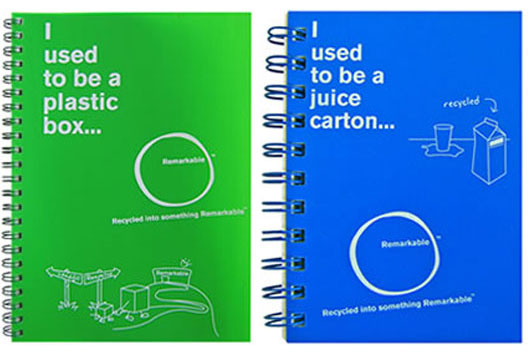
The first thing that I think will occur in the future is reusing what we can. Many products are being created so that they can be recycled or used as something else. Take for example the notebooks made out of recycled materials. It lowers the necessity to create new materials and is just as good.

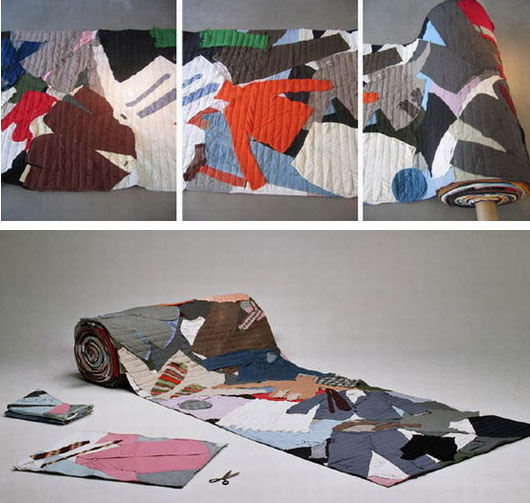
Or, the company that takes old clothing and turns them into a rug. They are made from clothes that are too worn through for the Salvation Army but will sit in a landfill if thrown away. In our last blog entry was an article about clothing and shoes made from recycled materials. If other companies followed this example, we would never have to create new materials again.

This semester we examined several examples of campaigns making a difference. The Story of Stuff is a 20-minute film narrated by Anne Leonard. The film shows the process of production, and the consumerism of America that fuels the overproduction trends of factories around the world. The waste of energy and resources were well illustrated in the film. Additionally, Leonard described how this trend produces vast amounts of waste that go to landfills, and gases harmful to the atmosphere, causing Global Warming. To end this cycle, individuals need to resist the “need” to constantly update their property.

Additionally, Chris Martenson’s Crash course illustrated the economic and environmental issues the United States are facing. He described these as predicaments. Unlike problems, these predicaments have outcomes. The United State’s economic predicament is a financial debt that is an unending cycle. The environmental predicament is the extreme depletion of natural resources. Skyrocketing industry is placing demands on the environment that cannot be withstood. According to Martenson, “the next twenty years will be nothing like the last”. This prediction will soon become a reality before our generation’s eyes, and the current issues of the housing crisis and retirement will be irrelevant as we cope with massive debt and seek completely different means to obtain energy.

Al Gore’s, an Inconvenient Truth, echoed this environmental issue as well. This movie illustrated the reality of Global Warming, and the drastic effects that will occur unless current trends are reversed. Unless steps are taken to reduce emissions damaging the earth’s protective atmosphere, the earth will undergo permanent changes that will be detrimental.

These three examples reveal a very important issue that needs to be addressed by our generation. It is not too late to start changing the trends that are harmful to the environment. The threat of Global Warming and a crisis of the depletion of resources can be combated. As we saw in Taking Root: The Vision of Wangari Maathai, one person’s will and determination can make a difference. Maathai’s inspiring story is a wonderful example. The Nobel Prize winner overcame the expectations of her culture, and gained respect for women, protected the environment of her home, and aided democracy in Kenya. Her greatest weapon in this movement? Simply planting trees.

From these campaigns in the media, we can gather the importance of being environmentally aware, and encouraging others to do the same. It is not to late for our generation to start combating the problems we will inevitably face unless changes are made.

Our generation really must step it up in the coming years or else we will be in trouble with no resources left.

--RecycleMania

Friday, May 7, 2010

Fashionably Eco-Friendly


Do you know how much the average American spends on clothes each year? According to Visual Economics, the typical American spends
nearly $2,000 on clothes- every year.
This high number is likely driven by the consumer mentality described in Story of Stuff, the desire to stay current with the latest products. We live in a society that thrives on the new trends of each season; thousands of dollars circulate an industry that encourages women to update their wardrobe. This cycle, however, produces detrimental effects on the environment by placing an increased demand on factories. These factories use large amounts of energy and produce significant amounts of waste.
There are a few ways one can make a positive impact in reversing this trend. The first is shopping at Goodwill and the Salvation Army. These thrift stores provide the opportunity to reduce waste by purchasing gently used items, as well as support those in need who are employed at these stores.
The other day, my friend Steph and I noticed a girl wearing an outfit that follows a recent tend, the jumpsuit.


We complimented her and asked where she got her outfit, and to our surprise, she replied "Oh it was my grandmother's". This is a perfect example of how trends recur, and how vintage stores and second hand thrift shops are a great place to find unique pieces. To many Americans, their appearance and wardrobe is of great importance. This is not necessarily an issue of vanity, but one of professionalism. For example, mindtools.com, a communication skills training website, noted that a picture is worth a thousand words; at an introduction, how you present yourself is that picture. The competitiveness of our society's job market demands that you dress well in order to
make a positive reflection of yourself and your employer. This can be accomplished without sacrificing style by exploring your options at vintage and second-hand stores.

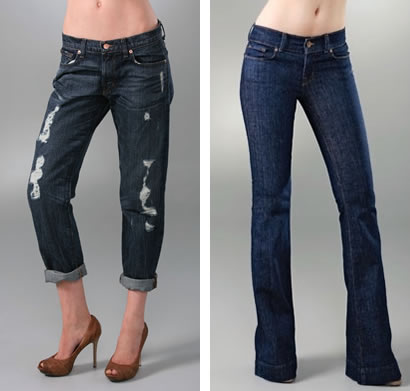
Another opportunity to dress in an way that reduces environmental damage is purchasing pieces from eco-friendly designers. These designers produce looks made from biodegradable material. Often, designers will use bamboo fabrics and organic cotton for their designs. The website She Knows Living featured the "Top 15 Hottest Eco-Friendly Designers":

Beau Soleil
Sworn Virgins:


Linda Loudermilk
Stella McCartney (has an organic line)
Enamore
Gaiam
Alternative Apparel
J Brand Organic:

Levi's Organic Jeans
Organic By John Patrick
Loomstate:

Saint Grace
Eco-Ganik
C&C California Organic
Bodkin:


Other designers are innovating interesting ways to work with the environment. This Ecotech Solar Jacket, by Zegna Sport, has sleeves are complete with solar panels that convert energy that can be used to charge your cell phone or ipod, or power a heating system in the jacket!
These shoes by Timberland have soles made from recycled tires:
Timberland partnered with Green Rubber, a Malaysian company, to make these Earthkeepers Boat Shoes.


Other ways to make your wardrobe environmentally friendly:
1. Share clothes with your friends, roommate, siblings
2. Get creative with your wardrobe, get the most out of an outfit by giving it completely different looks. You can do this simply by changing up your accessories. This is a great way to take an outfit from day to night.
3. Check out yard sales in your area for great finds.

With these changes, we can join together to start changing the trends of the American mindset and protect the environment.

Kacey Stark

Thursday, May 6, 2010

We Can Do It!

Global warming is real. This drastic climate change is no longer just an issue of rising temperatures, but a problem that will affect every aspect of our lives. The global climate will be drastically changed within the century, unless humans do not take immediate action to mitigate the problem.

Rising carbon dioxide emissions from the progressive industrial movement decreases the sun’s ray’s abilities to escape the atmosphere, thus causing global warming.

Although we are the primary contributor to this cause, we are not the only victims of its effects. Greenland was predicted to not melt for up to two thousand years, but recent data reported that this could occur within two centuries, resulting in a rise of up to 40 feet in sea level.

Another resulting phenomenon of climate change is a global migration of species due to the loss of habitat, towards more polar climates. However, those species that already live in the most extreme environments are left with no alternatives. This results in a serious decline of arctic biodiversity and population.

As demonstrated by our semester long project, we have learned ways to live more sustainably. By electing to not purchase unnecessary items, and reusing resources already available, we have been able to save time, money, and reduce our carbon footprint. If our efforts were reproduced on a large scale, even on a national level, it would help to reduce the amount of carbon dioxide emissions, thus lessening the effects of global warming.

Wednesday, May 5, 2010

Sustainable Living


How would you like to come home after a long day of work, put on your slippers, and sit down to relax in your favorite…garbage can?

No, this chair was not a recycled can that went to a recycling plant and got remade into a chair. This is a char made out of an actual garbage can. That’s right, while perusing the Internet to find some kind of cool “green” products I came across this site that takes old things and turns them into something new and useful.

Based in Vienna, Austria, the Gabarage Upcycling Design Company hires teams of artists and professional designers to recreate something beautiful out of garbage. Many of their products go to people who are in need of furniture and cannot afford new things.

Check it out other garbage products:

http://www.coolhunting.com/design/by-anna-carnick.php

Another cool website I found was for Eco-Kids Sustainable Art Products. These natural toys were created by a woman and her husband who wanted their kids to have safe, sustainable things to play with. The product that caught my eye was the “eco-dough.” It’s organic, rosemary-scented dough that doesn’t dry out and is edible! No longer shall a parent be afraid of the Double-Dog-Dare for their child to eat play-doh at recess again. It even comes in a gluten free version. Take that, Hasbro.

http://www.coolhunting.com/design/eco-kids.php

While I think that this is a bit excessive, “Eco Green Kids Organics” offers organic baby skincare. It uses pure, high quality ingredients that keep the baby’s skin hydrated. The packaging is environmentally friendly as well as their organic raw ingredients. Their program works directly with Pwo Karen hill tribe of Northern Thailand and Burma to help these people grow sustainable farms. All the materials are bought from them so the money goes directly to the tribe. The company, Erbaviva, holds a commitment to the environment and to the global community. Now that’s some powerful baby washer.

Check out the organic baby washbag and other “Eco Green Kids Organics” products here:

http://www.ecogreenkidsorganics.com/eb107.html


jenna

Tuesday, May 4, 2010

An Inconvenient Truth

An Inconvenient Truth is an indepth, emotional, yet scientifically supported argument from former Vice President Al Gore, the 45th Vice President of the United States, under the Clinton Administration. The argument attempts to halt global warming's devestating effects and publicize the common misconceptions and fallacies of the issue. Ultimately, this movie emphasizes that global warming is no longer a strictly political isssue, but is moving towards being the "biggest moral challenge facing our civilization today."
After watching this influential movie, the most powerful factor for me would most definitely have to be the comparitive photos of natural monuments such as Mount Kilimanjaro, in Africa in 1970 and 2000. The image clearly depicts a drastic decrease in the amount of of snow and ice covering the peak. Being able to visualize the dramatic difference between 2 specific times is so much more impactful, and clearly relayed to viewers, than members of society simply experiencing the change over an extended period of time. This concept is better explained by the frog and the boiling water example from the movie.
When a frog jumps into a pot of boiling water, it immediately jumps out so it won't get burned. However, if a frog jumps into a pot of luke warm water, and the heat is turned up, it won't jump out even when the water reachings boiling temperature. This concept comes from the movie and implys that a gradual change is more difficult to recognize and react to compared to one that can be observed at two completely different times.

To summarize the movie and my reaction, I can only say that change to reduce the impact of global warming must begin with an individual's personal decision to be a positive member of society and the ability of people to recognize a problem when there is one.


If you would like to visit the website for An Inconvenient Truth and read more about it visit
http://www.climatecrisis.net/

posted by Molly C.

Monday, May 3, 2010

ChevronToxico: The Campaign for Justice in Ecuador

Something has really started to bother me lately, especially with the news of this recent oil spill. The United States is putting an amazing amount of pressure on British Petroleum, the company whose oilrig sank and released over 200,000 gallons of oil into the water near our shore. While I am glad that this issue has gotten press, what bothers me is this is only now an issue because it is near our shores.

So many Americans are oblivious to the fact that this is happening in under-developed countries all over the world. Chevron, a major oil company, who merged with Texaco in 2001, has repeatedly chose “profit over people.” According to ChevronToxico , between 1964-1990 Texaco drilled in the Ecuadorian Amazon and purposefully dumped “more than 18 billion gallons of toxic wastewater, spilled roughly 17 million gallons of crude oil, and left hazardous waste in hundreds of open pits dug out of the forest floor.” In order to save money, Texaco continually used environmental practices that were so poor; they were illegal in both the United States and Ecuador.

The results of their practices have resulted in one of the worst environmental disasters in the world. The toxic material contaminated their soil, streams, and groundwater resulting in major increase of stomach, mouth, and uterine cancer, as well as birth defects and miscarriages. Chevron never cleaned up Texaco’s mess and they also continue to poison the rainforest.

Today, over 30,000 people are taking Chevron to court in order to ordain justice. Some say that Chevron and Texaco is responsible for $27 million dollars. This lawsuit has been documented in the movie Crude, whose trailer is below.

For more information to see what you can go to help please visit http://chevrontoxico.com/.

http://www.youtube.com/watch?v=kmpFrtXVHOc&feature=player_embedded

-SS

Saturday, May 1, 2010

Get Creative!

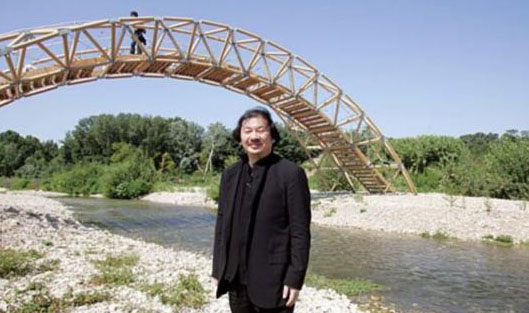
Ever think you could turn clothes into a rug? Or cardboard tubes into a bridge?
Well in fact, you can! As featured on the website, Ecoble, the Volksware company figured out a method to put clothes together into a carpet that can be cut to fit one's decor needs. The clothes used for the project can even include those that were not in good enough condition to donate to an organization such as Goodwill or the Salvation Army.
Recycled Clothing Rug
The website also featured a bridge capable of holding 20 people, made by architect Shigeru Ban. Ban was able to construct the structure out of 25o cardboard tubes. The stairs are comprised of recycled paper and plastic.
Recycled Cardboard Bridge

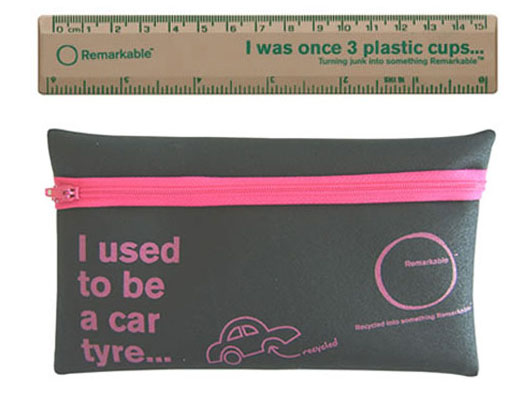
Another interesting company, Remarkable, markets products made from recycled material. The UK based company, founded by Edward Douglas Miller in 1996, was established to create innovative ways to recycle material. For example, some of Remarkable's products include turning a Sony Playstation into a writing pen, or a car tires into a notebook cover.
A major turning point for the corporation was in 2000, when at the Millennium Dome they featured the process of turning a plastic cup into a pencil. The company's goals are not only to make Eco-friendly products, but to encourage environmental awareness. Their products are definitely statement pieces, tracing the origin of each object.


According to the website, their principles include:
  • "To develop technology and provide products that will be sensitive to the earth’s finite resources and environment through the use of recycled and sustainable materials.
  • To promote energy-saving activities considering all aspects of the product’s life cycle in order to minimize the environmental impact of raw materials and components whilst conserving natural resources through waste reduction and the use of recycled and sustainable materials and components.
  • To endeavour to meet or exceed all applicable environmental and safety regulatory requirements.
  • To promote waste minimization activities, giving preference to recycled or renewable sources whenever practicable.
  • To promote continuous improvement and methods for improving manufacturing processes that minimize environmental impacts.
  • To encourage environmental awareness to all employees so that environmental factors are considered in all decision-making processes."
The company has partnered with 21 different organizations and corporations working to make a positive impact in the environment. Their website also features a blog of tips to live an Eco-friendly lifestyle. Many of these tips are featured towards showing kids how they can contribute.
Their products include bags, clothing, stationary, and outdoor objects.
Recycled NotebooksRecycled Bag and Ruler

These companies are all using creative ways to reuse resources and protect our environment. You can follow their example, and make your own contributions, simply by thinking outside the box. So this lovely Friday, I encourage you to start brainstorming what ways you can re-use what you already have, as our team has for the past few weeks. You might be pleasantly surprised to see how changes are easier than you would expect, and how little efforts can add up to a big difference.


Kacey S.